Call us on 9332 1755

Masala Stories no 3 - 2026
Malabar invites you to celebrate the spirit of dining well with:
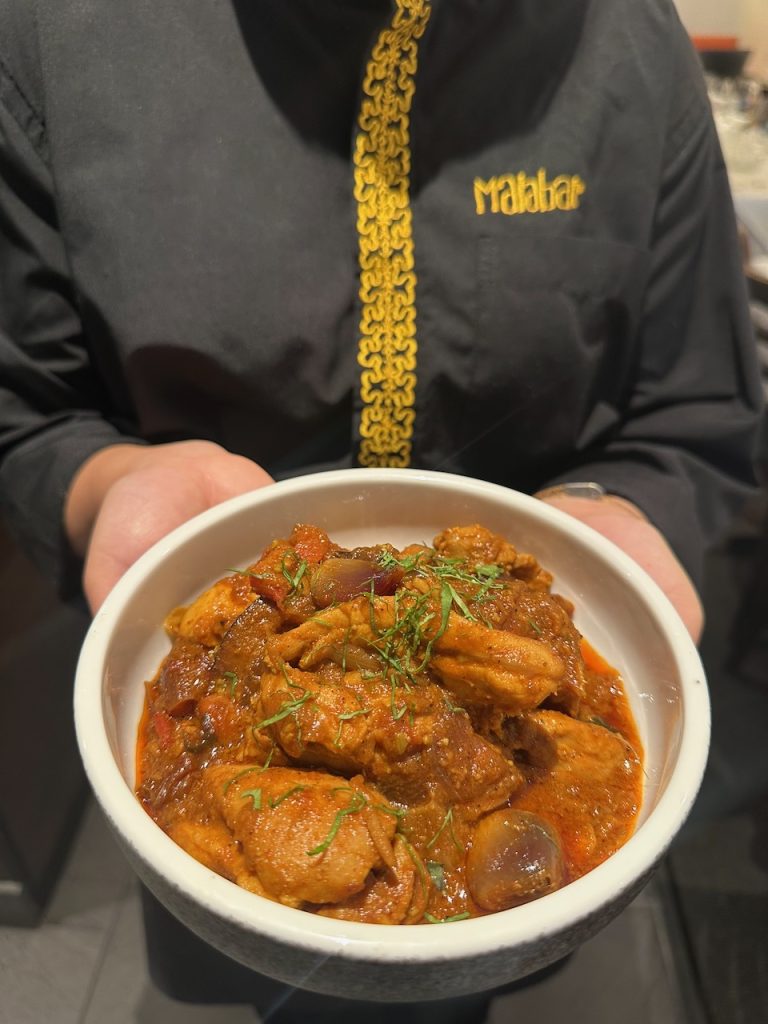
Chicken Peralan - Food Worth Hiding For...
Chicken Peralan has joined the specials menu.
Chicken Peralan belongs in the repertoire of typical Kerala dishes from a different era, when fuel was scarce and time was not. Imagine the dust on the road from stampede of busy feet walking to fields, the smell of open fire fuelled by wood collected in the morning, then the blooming of spices in hot coconut oil, it would have had an aroma like nothing else. Cooking Peralan happened slowly, often uncovered, allowing ingredients to change character at their own pace. The aim was not speed or presentation. It was to let simple meat become something fuller through patience. Chicken is cooked with coconut, curry leaf, black pepper, dried chilli, and roasted spices. As it cooks, moisture evaporates. The masala thickens and settles into the meat. Flavour moves inward rather than sitting around it.
The dish becomes quieter and more complete the longer it is left alone.
Peralan was valued because it did not rush. The flavour stayed true, whether eaten immediately or some time later. That is still the logic behind the dish.
'Secret’ exchanges across food departments is probably every hotel's worst kept secret.
I first learnt to cook Peralan during my placement at the Taj Coromandel in Chennai, under Chef Gopal from Kerala. He knew spices the way a carpenter knows wood. By how they arrived. By their colour in the palm. By how they opened when warmed. He could tell where a pepper came from by the first aroma released in the pan, whether a chilli had been dried too quickly, whether a clove was young or tired. He adjusted without comment. A pinch less here. A moment longer there. Nothing was measured, but nothing was accidental.
At the time, Chicken Peralan was a favourite for South Indian banquet functions. Cooked in large batches. Served to guests exactly as intended. Calm, balanced, dependable. Staff meals at the hotel canteen were a different story. The canteen food did its job. Built for volume, not memory.
Those of us from south India would sometimes quietly swipe a small batch of Peralan from the banquet kitchen. It is not spicy dish by nature, so we would spice it up a little. Just enough to make it ours. We would disappear into the storeroom before anyone noticed, sit on milk crates, and eat quickly, trying not to look too pleased with ourselves as we avoided the canteen food.
When the pastry section next door finished a batch of gulab jamun, they often joined us. Chef Gopal ate with us there, in the storeroom, sitting on milk crates, in the same way kitchen staff everywhere in the world do.
Hierarchy magically ceases to exist when there is good food at stake.
We are simply together. Offstage.